
If, like us, you’re fascinated by abandoned places and dark tourism, you’ll be well aware of the Chernobyl Nuclear Exclusion Zone. It’s somewhere we’ve always wanted to see, so when the chance arose to go to Kyiv for the Eurovision Song Contest a few years ago, it was the perfect opportunity to squeeze in a day trip to the zone. It was an amazing experience that I would highly recommend if circumstances change in Ukraine in the future.
If you’re not overly familiar with the story of the disaster, we would highly suggest watching the amazing HBO series Chernobyl. It gives an excellent, terrifying account of the incident. It’s probably one of the best TV series we’ve ever seen. For a deeper dive, the book Midnight in Chernobyl by Adam Higginbotham is fantastic. It’s widely considered to be the definitive history of the event.
What Happened at Chernobyl?
On the 26th of April 1986, the Chernobyl Nuclear Power Plant caught fire, resulting in one of the most devastating nuclear incidents the world has ever seen. The USSR initially denied anything was wrong until a nuclear power plant in Sweden picked up irregular radiation readings.
36 hours after the initial explosion, the government ordered the evacuation of the nearby city of Pripyat and a 30km exclusion zone was established. This zone remains in place today. Nature has started to reclaim much of the area which is very much left as it was in 1986. It is an astonishing place to visit.
Visiting the Nuclear Exclusion Zone
Ukraine gained its independence from the Soviet Union in 1991 and as the country opened up more to tourism, the intrigue around seeing the abandoned city and the site of the world’s worst nuclear disaster grew.
The Ukrainian government carried out a comprehensive safety review and decided to issue permits for companies to provide tours to the Chernobyl Nuclear Exclusion Zone. The rules around entry are strict and enforced by the Ukrainian military. Once you follow the rules and stay with your guide, you should be safe.
Lots of people worry about the level of radiation but a short visit won’t cause any issues. The typical radiation exposure you experience on a Chernobyl tour can range from 130 to 2610 microsieverts per hour, or the equivalent of a long haul flight.

The Rules for Entering the Zone
These are the rules that anyone entering the Chernobyl Nuclear Exclusion Zone must abide by:
- Authorized Guides Only: You can only enter with a tour guide authorised by the Ukrainian government. Entering without one is illegal and highly dangerous.
- Security Checkpoints: You need to stop at security checkpoints going into the zone at the 30km and 10km points. You must also pass through radiation scanners at both of these checkpoints on the way out.
- Strict Time Limits: You can’t stay inside the zone for more than 12 hours at a time without special permission from the government.
- Identification: You must show identification when entering and carry it with you at all times. You can’t place your identification on any surface while inside the zone.
- Restricted Areas: Armed guards patrol the perimeter. Certain areas remain off-limits, such as the machine cemetery which contains heavily radiated vehicles. If you see a radiation sign, stay away!
- Dress Code: Your clothing must be appropriate. Open toe sandals and flip flops are forbidden, as are shorts and shirts. Your arms must be covered so no t-shirts or vests. As much of your skin as possible must be covered.
- Building Safety: Only enter buildings if a guide says it’s okay to do so. The buildings can be unstable with a lot of debris and broken glass around.
- No Alcohol: Alcohol is forbidden inside the zone. Anyone intoxicated will not be allowed in. The guards may check at the 30km entry point if they suspect you’ve been drinking.
- Smoking Restrictions: Smoking or vaping in the open air is forbidden. You can do neither anywhere within the 10km zone.
- No Eating or Drinking: You are not permitted to eat or drink in the zone except in the designated area approved by the government. Drinking water from any open water source is strictly forbidden.
- Do Not Touch ANYTHING: Objects, structures and vegetation can’t be touched under any circumstances. You are also not permitted to sit on the ground or place any personal item on any surface.
- No Souvenirs: Do not take anything out of the zone.
So yes, there are a lot of rules but they’re simple enough to follow. The guides are also quick to tell you if you’re in danger of doing something you shouldn’t and the routes you follow keep you away from anything too dangerous or radioactive.
What to See in the Exclusion Zone
Chernobyl tours take you to a number of locations within the Exclusion Zone. Although the exact itinerary varies depending on the company and guide, these are the sites that most tours cover.
Reactor Number 4
This is where the disaster happened. At 1:23 am on 26 April 1986, Reactor 4 exploded during a safety test causing widespread destruction and the release of radioactive material and smoke from the fires that burned for nine days.
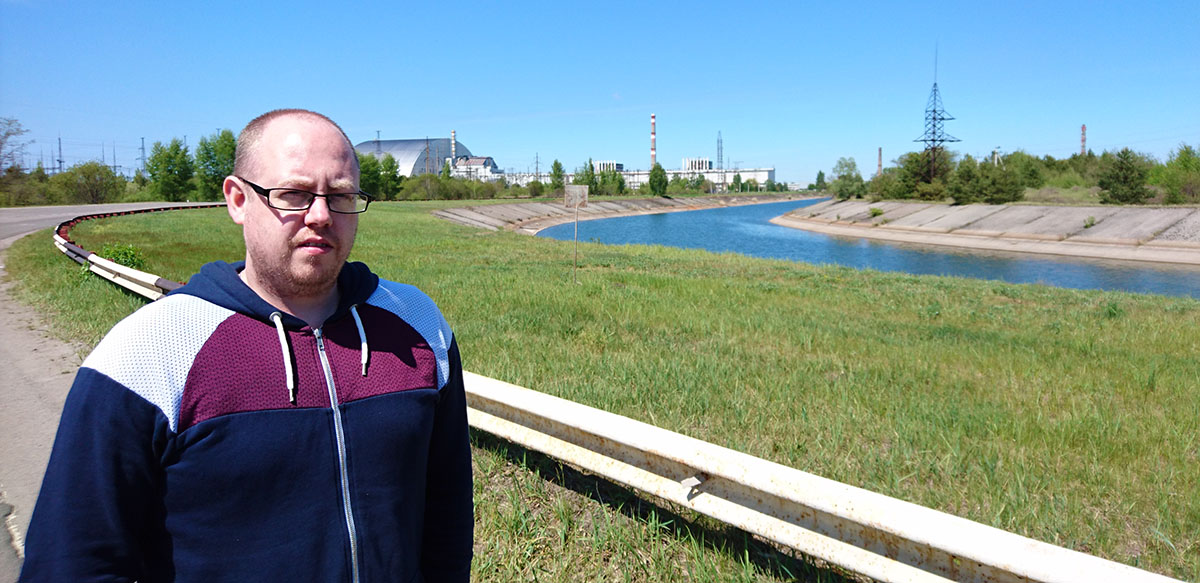
A concrete shell (known as the Sarcophagus) was hurriedly built in the months after the accident to contain the radiation but it was crumbling by the 2000s. Today, the reactor is covered by the massive New Safe Confinement (NSC) shelter.
This silver arch is the largest movable land-based structure ever built. It’s large enough to enclose the Statue of Liberty! It was built off-site and slid over the reactor in 2016 to seal it off for the next 100 years. It was damaged by a Russian drone strike in 2025.
We were really surprised how close we got to the reactor. You can stand about 50 metres away near the monument to the Liquidators (the workers who cleaned up the site) and it’s perfectly safe to do so. It’s a surreal feeling standing so close to the site of the accident.

Statue of Lenin
The only statue of Vladimir Lenin still standing in Ukraine is here in the Nuclear Exclusion Zone. Following the decommunisation laws passed in 2015, almost all Soviet statues across the country were pulled down. However, because the zone is a place where time effectively stopped in 1986, this one remains.
It’s a strange sight to see the founder of the USSR still watching over the abandoned landscape. It serves as a stark reminder that while the rest of the world moved on, this place is still very much trapped in the Soviet era. It actually gave us the exact same unsettling feeling we had walking through the preserved cells of the KGB Museum in Vilnius, another place where the dark reality of the Soviet Union has been left completely intact.

Duga Radar
Deep in the forest lies the Duga Radar, a massive metal structure that looks like something out of a sci-fi movie. Standing 150 metres high and stretching for 700 metres, this was a top-secret Over-the-Horizon radar used to detect incoming long-range missiles from the US during the Cold War.
It was called The Russian Woodpecker because of the repetitive tapping noise it blasted across radio frequencies worldwide. For years, nobody outside the Soviet Union knew where the sound was coming from. Standing underneath it, you feel tiny. It’s exactly how we imagined a secret Soviet military facility would look!
We have more about the Duga Radar here.

Chernobyl Village
People often confuse the power plant with the town. The village that gave its name to the Chernobyl Nuclear Power Plant is actually located about a 15-minute drive away from the reactors.
Unlike Pripyat, which is totally abandoned, Chernobyl Village actually functions as the administrative centre for the zone. Workers who maintain the safety of the area live here in shifts (usually 15 days on, 15 days off) to manage their radiation exposure.
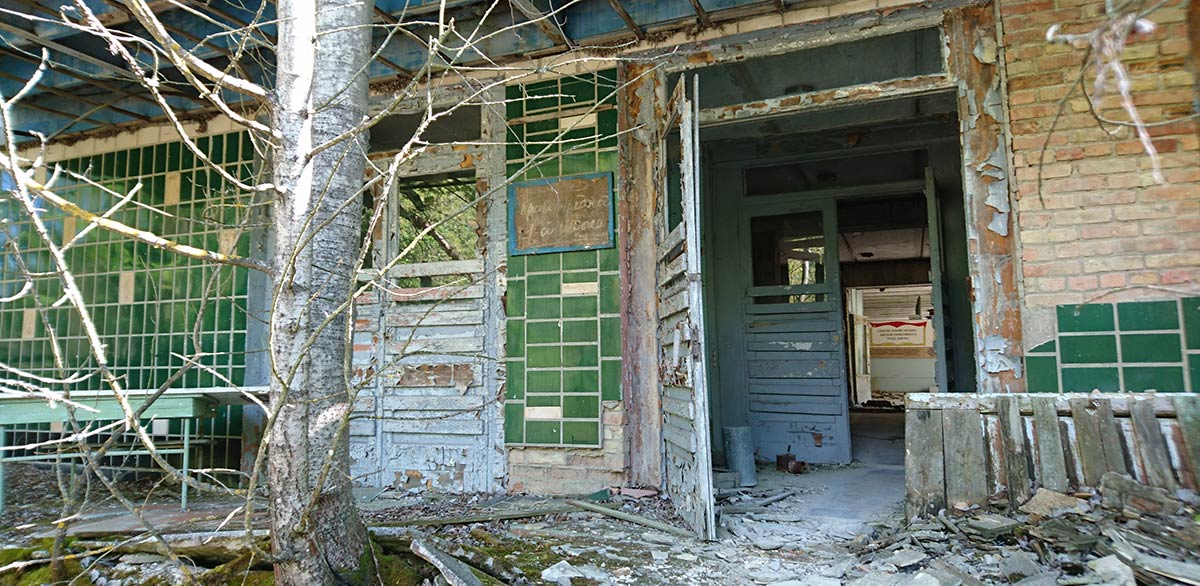
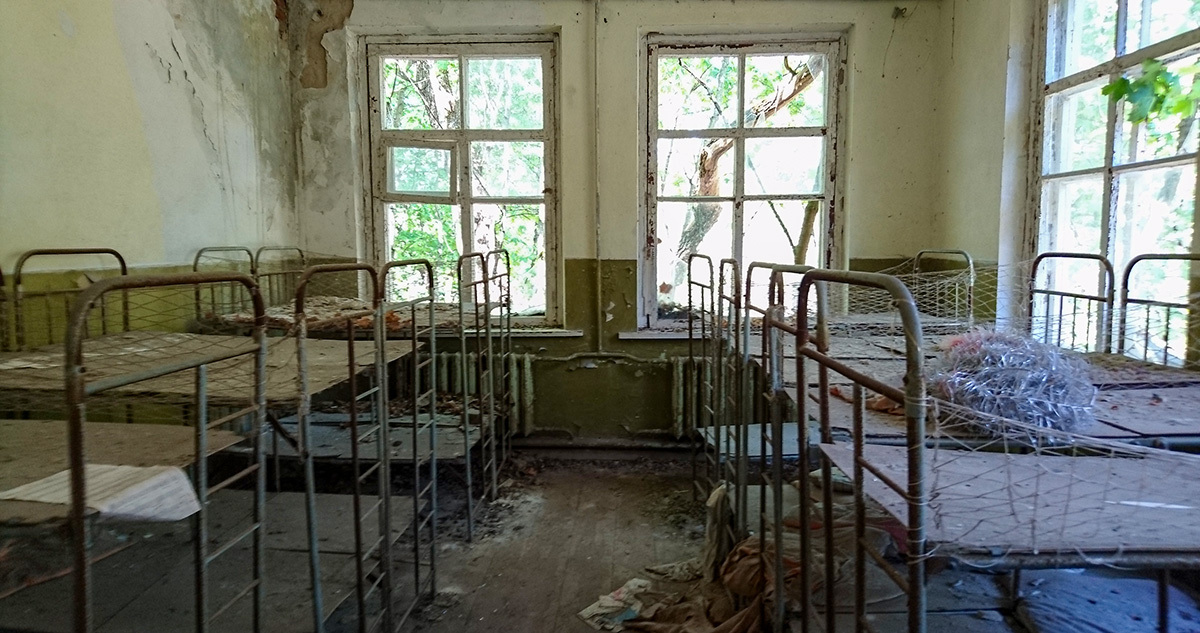
We stopped at an old abandoned school here and were able to go inside. This was probably the place that gave us the eeriest feeling of the whole trip. Seeing the dust-covered books, the peeling paint and the children’s toys left behind really brings home the human cost of the tragedy.
Pripyat
Of course, the main attraction is the city of Pripyat. Founded in 1970, this was an Atomgrad, a closed city designed specifically for the power plant workers and their families. It was intended to be a model Soviet city of the future, home to nearly 50,000 people with an average age of just 26.
Because it was designed with wide avenues and a modern layout, the evacuation on 27 April 1986 was executed with incredible speed. The entire city was emptied in just under three hours. As a result, Pripyat was left very much as it stood in 1986. Walking through it today is surreal. Nature is aggressively reclaiming the city. Trees are growing through the concrete in the main square and the football pitch at the Avanhard Stadium is now a fully grown forest.
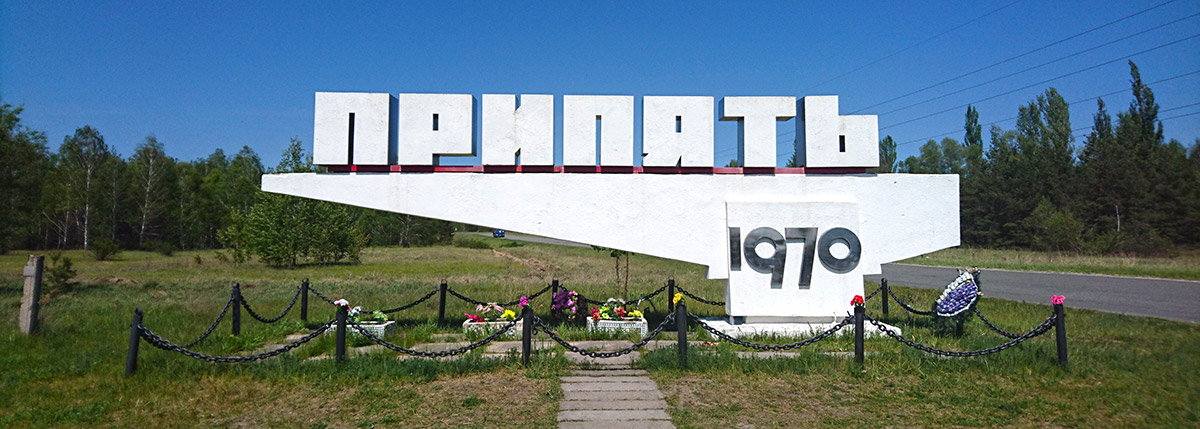
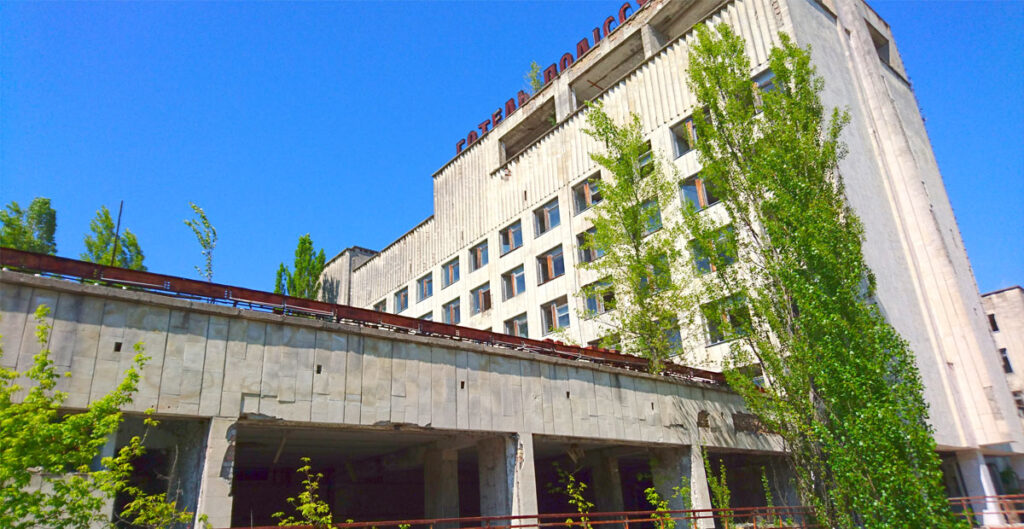
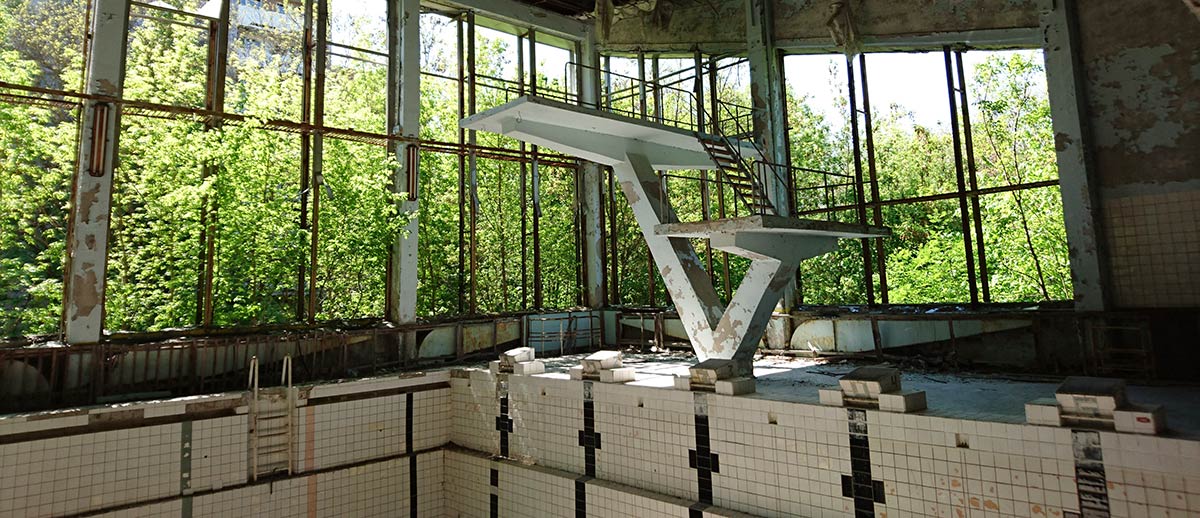
You start by seeing the iconic city sign before walking into the centre to see the hollow shells of the Palace of Culture, the Polissya Hotel and the Prometheus Cinema. We also visited a school that still had a swimming pool and basketball court, though the floorboards were rotting away.

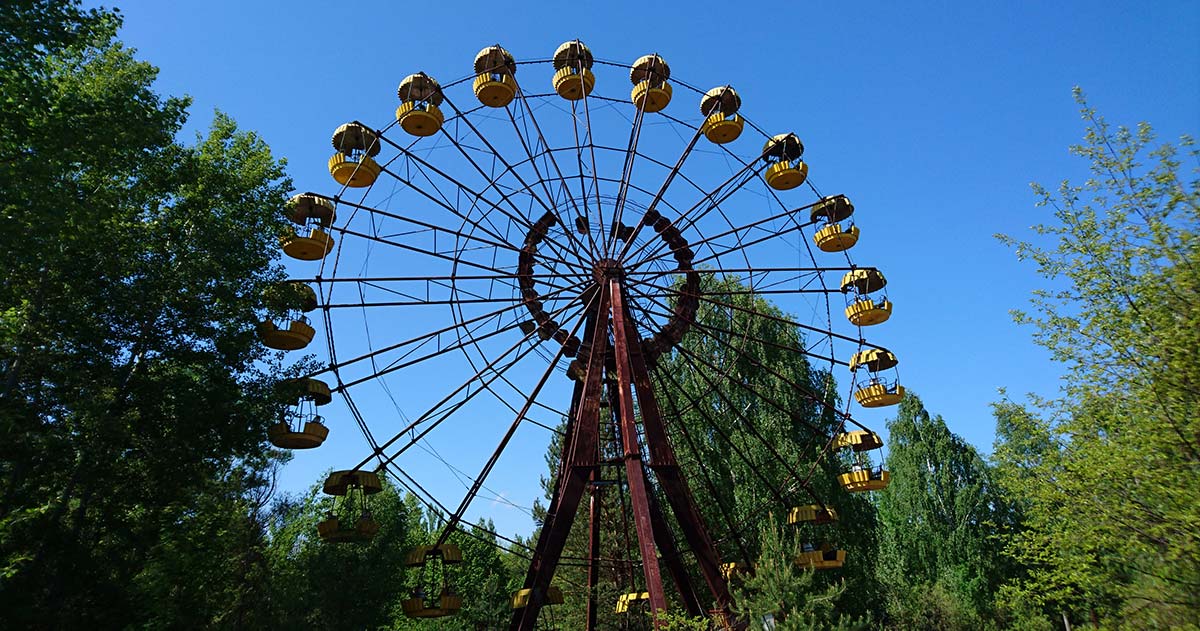
We ended our tour at the Amusement Park which is easily the most haunting location in the entire zone. The yellow Ferris wheel has become the iconic symbol of the disaster, standing alongside rusted bumper cars and swing boats. The tragedy is that the park was scheduled to open for the May Day celebrations on 1 May 1986, just five days after the explosion.
Overall, the tour of the Chernobyl Nuclear Exclusion Zone is probably one of the most amazing travel experiences we’ve had. It was surreal, powerful and sobering. It was a powerful way of seeing the real human cost of the Chernobyl tragedy. Being fascinated with abandoned places, it lived up to all the expectations we had and then some. Once things return to normal in Ukraine, we would highly recommend seeing what it’s like for yourself. Pair it with a trip to Kyiv, a city with a lot of surprises and wonderful people.


Pingback: Dark tourism destinations: the world's most haunting sites - The Dark Threshold