The National Museum of Ireland: Country Life is a bit of a unique one. It’s the only branch of the National Museum located outside of Dublin, tucked away in Turlough, County Mayo.
We always thought it was a slightly random location for a national museum but after finding ourselves in the area and deciding to pop in for a look, we completely get it now. It’s set in a stunning estate, it’s free to enter and we’re genuinely glad we made the stop. It’s a brilliant insight into a side of Ireland that is fast disappearing. It’s a real step back in time the second you arrive on the estate. The modern building sits amongst the historic grounds but it does a brilliant job of showing exactly how ordinary people lived day to day before modern technology changed everything.
Visitor & Practical Information
- Location: Turlough Park, County Mayo (just outside Castlebar)
- Eircode: F23 HY31
- How to get there: Best reached by car with plenty of free parking on site.
- Price: Completely free entry.
- Time needed: 1 to 2 hours.
- Family-friendly? Yes, with great interactive displays and an outdoor playground.
- Opening Hours: The museum is open Tuesday to Saturday (10am to 5pm) and Sundays (2pm to 5pm). It’s closed on Mondays including Bank Holidays.
- Food & Drink: There’s a Synge & Byrne café on-site for a cup of tea, a snack or a light lunch.
- Gift Shop: You’ll find a shop where you can get bits like local crafts, books or souvenirs.
Where is the National Museum of Ireland: Country Life?
The National Museum of Ireland: Country Life is set within the 30-acre Turlough Park estate. The nearest village is Turlough in County Mayo, just outside Castlebar on the N5 road.
It’s a good distance away from the other branches of the National Museum (which are all in Dublin) but it fits perfectly into a trip to the west.
Getting to the museum is straightforward, though having a car makes life much easier:
- By Car: This is the best option because public transport to the door is limited. If you need to rent a car for your trip, we usually use Discover Cars to compare prices as rentals can get pricey in summer.
- By Train: There’s a train station in Castlebar on the Dublin to Westport line. We recommend checking Omio for times and tickets but keep in mind you’ll need to grab a taxi from the station out to the museum.
Since the museum is located in Turlough, the nearest town is Castlebar which is only 10 minutes away. The Breaffy House Resort is a great option here. It’s a beautiful old estate that matches the historic vibe of the museum perfectly. We’ve stayed in it before and it’s a really nice place. We’d suggest checking Booking.com for places to stay in Castlebar. There’s some lovely spots. It’s a really nice town and our next door neighbour is from there!
What is the National Museum of Ireland: Country Life about?
The museum focuses on the period between 1850 and 1950 and shows various items from rural life in Ireland during that time. This century was a time of transition for the country, taking in the aftermath of the Famine, the fight for independence and the march towards modernity. The exhibits capture the essence of a hardy, resourceful people who lived closely with the land and the changing seasons.
It’s very much about the Ireland you’ll have seen in movies such as The Quiet Man, The Field and The Banshees of Inisherin. If you haven’t seen them, they’re essential viewing before a trip to the west of Ireland!

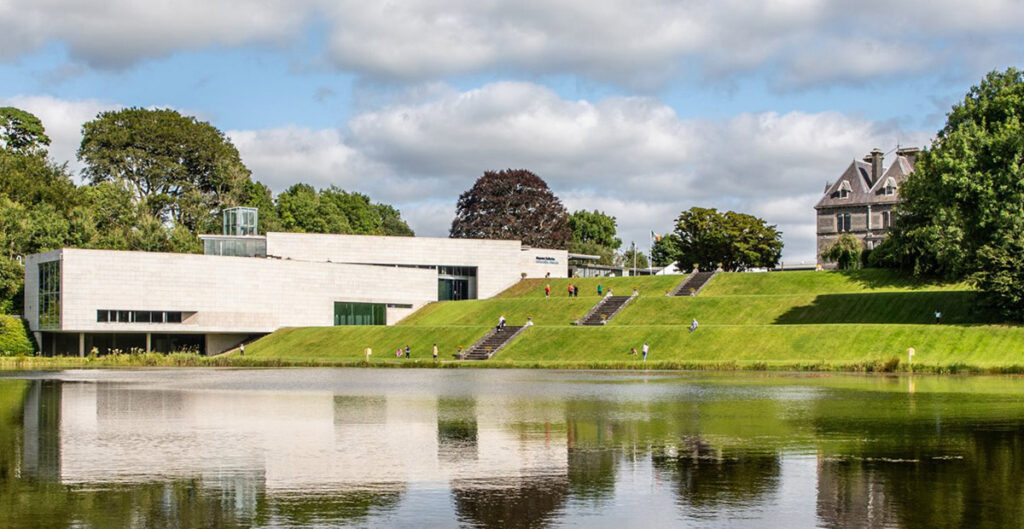
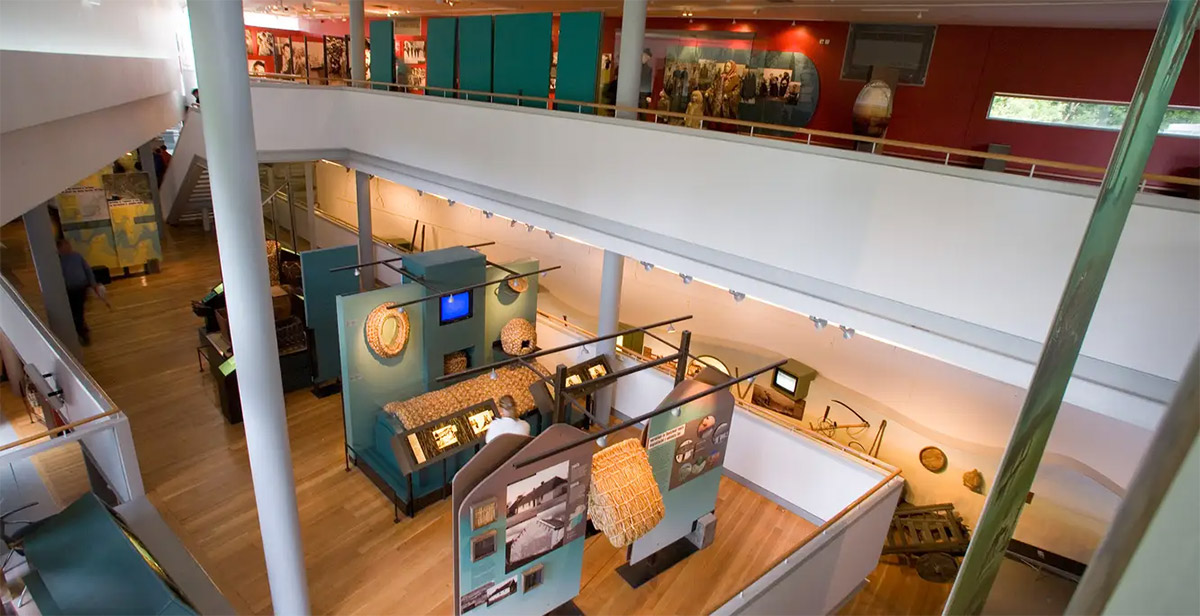
The beautiful modern building is in contrast to the simpler life depicted inside. Spread across a number of floors, the museum is surprisingly bigger than what you’d expect from the outside. The building is cleverly built into the slope and as a result doesn’t detract from the environment around it too much. It’s the type of place that Kevin McCloud would LOVE if it was on an episode of Grand Designs.
What’s in the National Museum of Ireland: Country Life?
The collection here is massive and it’s split between the impressive modern building and the grounds. It’s entirely focused on the ordinary, everyday objects that defined rural living for over a century. It’s really interesting to see things that our grandparents have talked about and get a sense of what life was like for them in Ireland before we were even born!
Traditional Clothing
When you enter the main museum building, you’re greeted by a display of clothing worn by Aran islanders in the late 19th century. We were interested to learn that Ireland doesn’t have distinctive national clothing except for those on the Aran Islands. It’s not an Aran jumper by the way!
There are a few items of native Aran costume you can try on if you’re so inclined. We got a great laugh trying to work out which way things go on. Is it a shawl? Is it a skirt? Who knows? Who cares!
The Galleries
The museum winds downwards over four floors, each dedicated to a different aspect of rural life. One of the first things you’ll notice is the scale of the exhibits. Rather than just placing small items behind glass, they’ve managed to suspend massive, full-sized traditional fishing boats known as currachs directly from the ceiling alongside heavy agricultural machinery. It sets the tone for a very immersive experience.
The Natural Environment
This section was fascinating because it shows just how difficult life was in rural Ireland. You’ll see the tools used for cutting turf in the bog, kelp harvesting from the Atlantic and the back-breaking work involved in farming the rocky soil. The displays delve into how nothing was ever wasted. Everything harvested from the earth or sea had a purpose, from seaweed used as fertiliser to straw woven into roofing and ropes. It really highlights the resilience and ingenuity of the people who lived here.
Hearth & Home
This floor was our favourite. It recreates the interior of a traditional thatched cottage, centring on the open hearth which was the literal and metaphorical heart of the home. The hearth was where meals were cooked, wet clothes were dried and families gathered to share stories and songs at the end of a long day.
It’s crazy to think that for many people in rural Ireland, electricity and running water are relatively recent luxuries. Seeing the simple wooden dressers, the space-saving settle beds and the religious iconography really transports you back to a bygone era. One of the great things about this section is that it’s highly interactive. You can pick up the heavy wicker baskets to see how items were carried to market or sit on the Súgán chairs to test their strength. We love touching things in museums!
Festivals & Superstitions
This is the most unique part of the collection. It dives into the old customs, piseogs (superstitions) and traditions that governed rural life. Keep an eye out for the Strawboys and Wren Boys costumes. These were groups who’d disguise themselves in elaborate straw masks to dance at weddings or hunt the wren on St. Stephen’s Day.
The displays also explore the protective charms people would hide in their homes, the rituals surrounding death and waking and the belief in fairies. Seeing the intricate, almost pagan-looking straw costumes up close is actually a little bit spooky. How they’ve not appeared in a horror movie yet is beyond us!
Events and Craft Demonstrations
The museum isn’t just a static display of history. It hosts live craft demonstrations, seasonal workshops and talks that bring the exhibits to life. It’s well worth checking their programme before you visit to see if you can catch experts practising traditional spinning, weaving or basket making. There was none on when we went.
Turlough Park House and Gardens
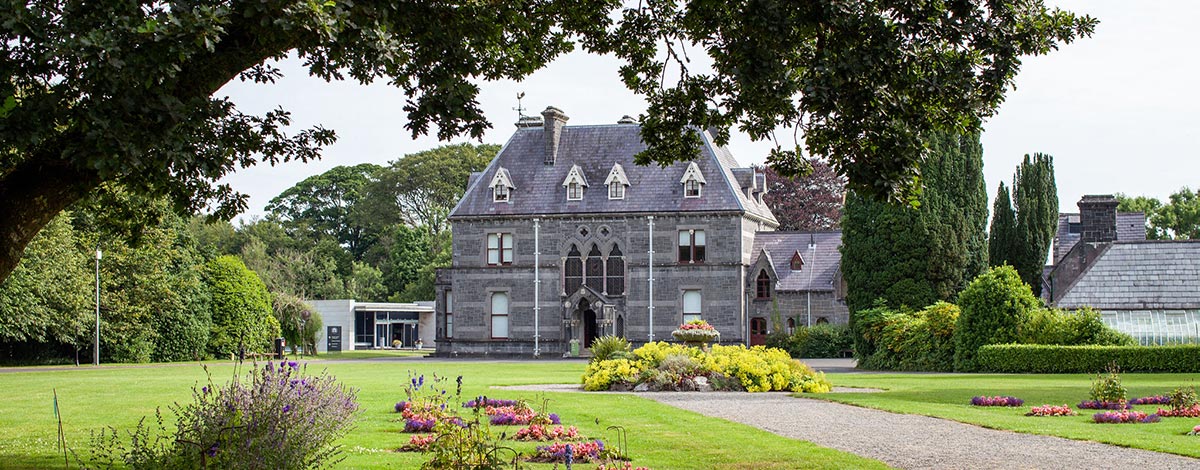
Once you’re finished in the modern building, you can walk across the courtyard to Turlough Park House. Some of the rooms on the ground floor like the drawing room and library have been restored and are open to the public.
It’s a classic Big House where the wealthy Fitzgerald family lived. We were interested to learn that many of these landlords actually spent much of their time in London, only visiting these massive estates occasionally. Walking from the museum (which depicts extreme poverty and hard labour) into this mansion is a stark contrast. It’s a pity more of the house isn’t open but it’s definitely worth a look to see how the other half lived.
Don’t rush off without exploring the grounds. The estate has lovely Victorian gardens, a scenic lake and woodland walks. There’s also a great playground for kids. It’s the perfect spot for a ramble on a dry day!
Make a Day of It
Since you’re already in County Mayo, it’s easy to make a full day out of your trip. Mayo is a massive county packed with spectacular sights and historic gems. The museum is only about a 20-minute drive from Westport House, making it very simple to combine both into one itinerary. You could easily spend your morning soaking up the rural history in Turlough before heading over to Westport to explore the grand estate and grab a bite to eat in one of the town’s pubs.
If you’re looking for stunning coastal scenery, The Wild Atlantic Way is just a half-hour drive away. You might consider driving out towards Clew Bay to take in the views. If you’re more actively inclined, you could tie in a visit with a cycle along the Great Western Greenway or a hike up Croagh Patrick. The possibilities are endless when it comes to things do in the West of Ireland that could make an unforgettable addition to your museum trip.
The Verdict on the National Museum of Ireland: Country Life
The National Museum of Ireland: Country Life is well worth a visit. We were genuinely surprised by how much we enjoyed it, especially considering we only popped in on a whim.
It’s an interesting look at an integral part of our history and the fact that it’s completely free to enter makes it one of the best value days out in County Mayo. Whether you’re from a rural area yourself or a city slicker, you’ll look back in admiration at how people survived despite their struggles in a period categorised by poverty and great change.
Visit and learn something. You’ll be glad you did.