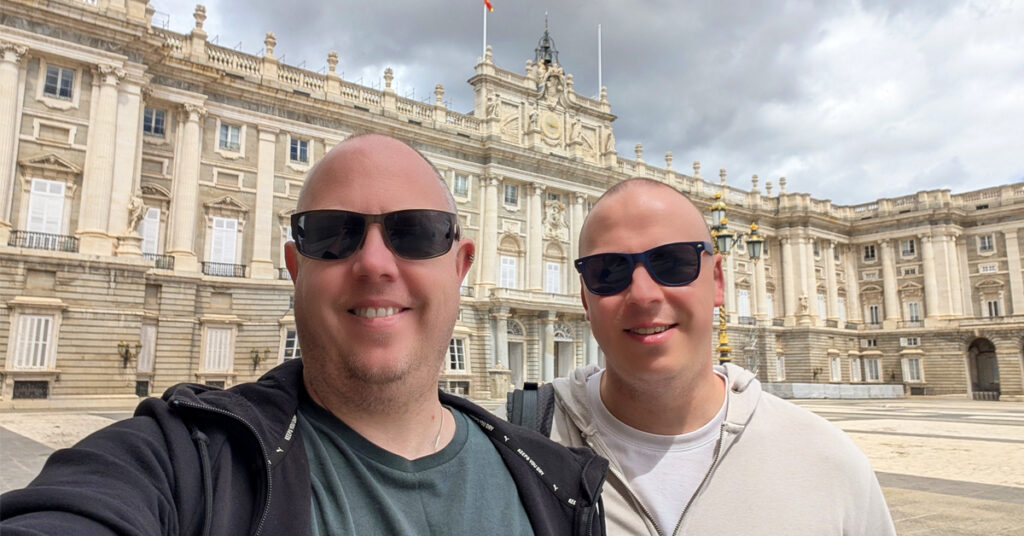
If you know us, you know we can’t resist a good nosey around a royal palace. Denis, in particular, is a bit obsessed. If there’s a throne room, a grand staircase or a chandelier involved, he’s there. So, naturally, the Royal Palace of Madrid (Palacio Real) was the top of our list of things to do in Madrid!
We’ve seen a fair few royal residences in our time, from Hampton Court in London to Miramare Castle in Trieste, but the sheer scale of this place is on another level. It’s actually the largest functioning Royal Palace in Europe—even bigger than Buckingham Palace and Versailles! With over 3,000 rooms, it’s a stunning display of wealth, history and gold. So much gold!
Because it’s the number one sight in the city, the queues can be absolutely brutal if you aren’t prepared. If you’re wondering if it’s worth battling the crowds or if you should just admire it from the outside, here’s our honest guide to visiting the Royal Palace of Madrid.
A Quick History
Before you go, it helps to know a tiny bit of context so you aren’t just looking at random old furniture. The palace stands on the site of an old Moorish fortress, the Alcázar (not to be confused with the Swedish pop band who sang Crying At the Discoteque) which burned down in a massive fire on Christmas Eve in 1734.
King Philip V ordered a new palace to be built on the ashes but with one strict rule: no wood in the structure. He wanted it built entirely of stone and brick to ensure it would never burn down again. That’s why the building feels so solid and imposing today.
While it’s the official residence of the Spanish Royal Family, they don’t actually live here anymore (they live in the more modest Zarzuela Palace outside the city). Today, the Royal Palace is used strictly for state ceremonies, official banquets and impressing tourists like us!
How To Get There
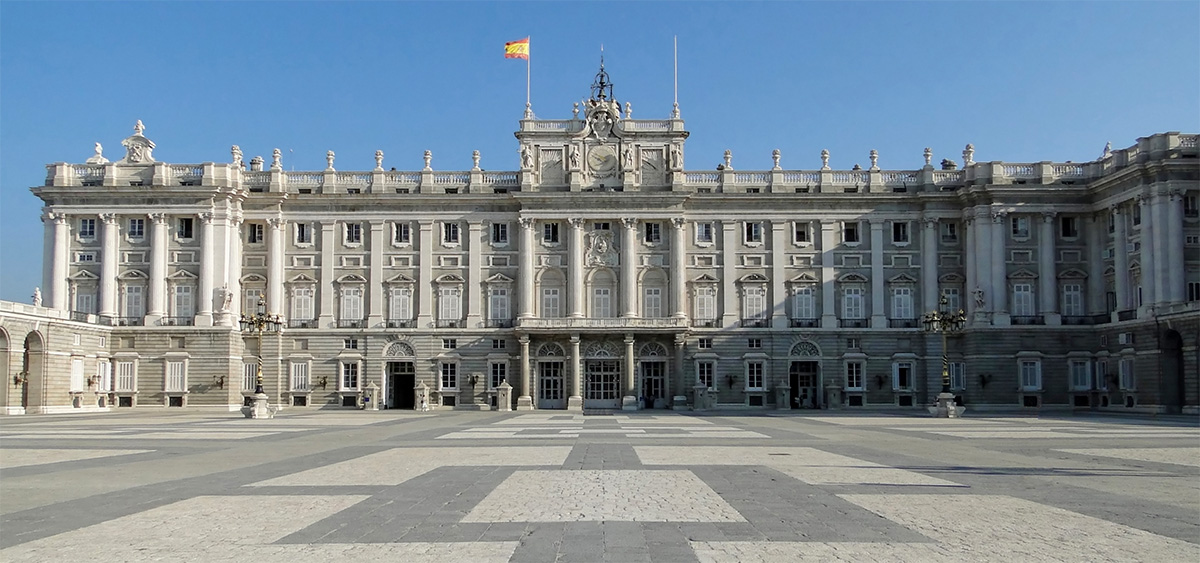
The Palace is right in the centre of Madrid, making it incredibly easy to find. It’s located on the Plaza de Oriente, right next to the Almudena Cathedral. We’d recommend visiting that too!
- By Metro: The closest station is Ópera (Lines 2 and 5). From there, it’s just a 5-minute walk past the Teatro Real to the palace entrance. You can’t miss it!
- Walking: If you’re staying near Plaza Mayor or Puerta del Sol, you don’t need the Metro. It’s a 10-15 minute walk down Calle Mayor through the historic centre.
- By Bus: Lines 3, 25, 39 and 148 all stop nearby.
- By Taxi/Uber: If you want to save your legs, just ask for “Palacio Real.” There is a drop-off point right near the main courtyard.
This area is known as Madrid de los Austrias (Old Madrid) and it’s probably the best place to stay if you want to do a bit of sightseeing.
If you want to wake up right next to royalty, we recommend looking for accommodation near the Royal Palace on Booking.com.
Tickets & Prices
We can’t stress this enough: Don’t turn up without a ticket!
The queue to buy tickets at the gate can easily be over an hour long, even in the off-season. You’ll be left standing in the sun (or rain) watching people with online tickets breeze past you. We were warned about this before we went and we were so glad we listened to the tip.
We bought our tickets online in advance via GetYourGuide, which allowed us to skip the ticket line completely and go straight to security. In terms of what to buy, the General Admission ticket is usually all you need as it gets you into all the main Palace state rooms and the Royal Armoury.
One thing we were really keen to catch was the Changing of the Guard. You don’t need a ticket for this part at all. It takes place in the courtyard outside so you can just turn up and watch it for free (more on that below!).
Opening Times & Best Time to Visit
The Royal Palace of Madrid is generally open every day of the week but because it’s still a working palace used for state ceremonies, the hours can change (or it can close completely) with very little notice.
Standard opening hours are usually from 10:00 AM to 6:00 PM from October to March and until 7:00 PM from April to September. The last access is always one hour before closing time.
Since the King and Queen actually use the palace for state dinners and official acts, we highly recommend checking the official website a few days before your trip just to make sure there isn’t a surprise royal event happening! We were nearly caught out by the funeral of Pope Francis on our visit.
We went for one of the first slots of the day and it worked out perfectly. We arrived in time for the Changing of the Guard and then headed straight in. By the time we were leaving around 1:00 PM, the tour buses had arrived and the place was absolutely packed.
Top Things To See & Do
The tour route is one-way and takes you through the most impressive state rooms. It usually takes about 90 minutes to 2 hours. Here are the bits that really stood out to us:
The Changing of the Guard
Before we even went inside, we managed to catch the Changing of the Guard. It usually happens on Wednesdays and Saturdays from 11:00 AM to 2:00 PM at the Puerta del Príncipe.
Seeing the soldiers in full dress uniform with the horses is a fantastic spectacle and it’s completely free. It really sets the mood before you enter the palace itself.
The Grand Staircase
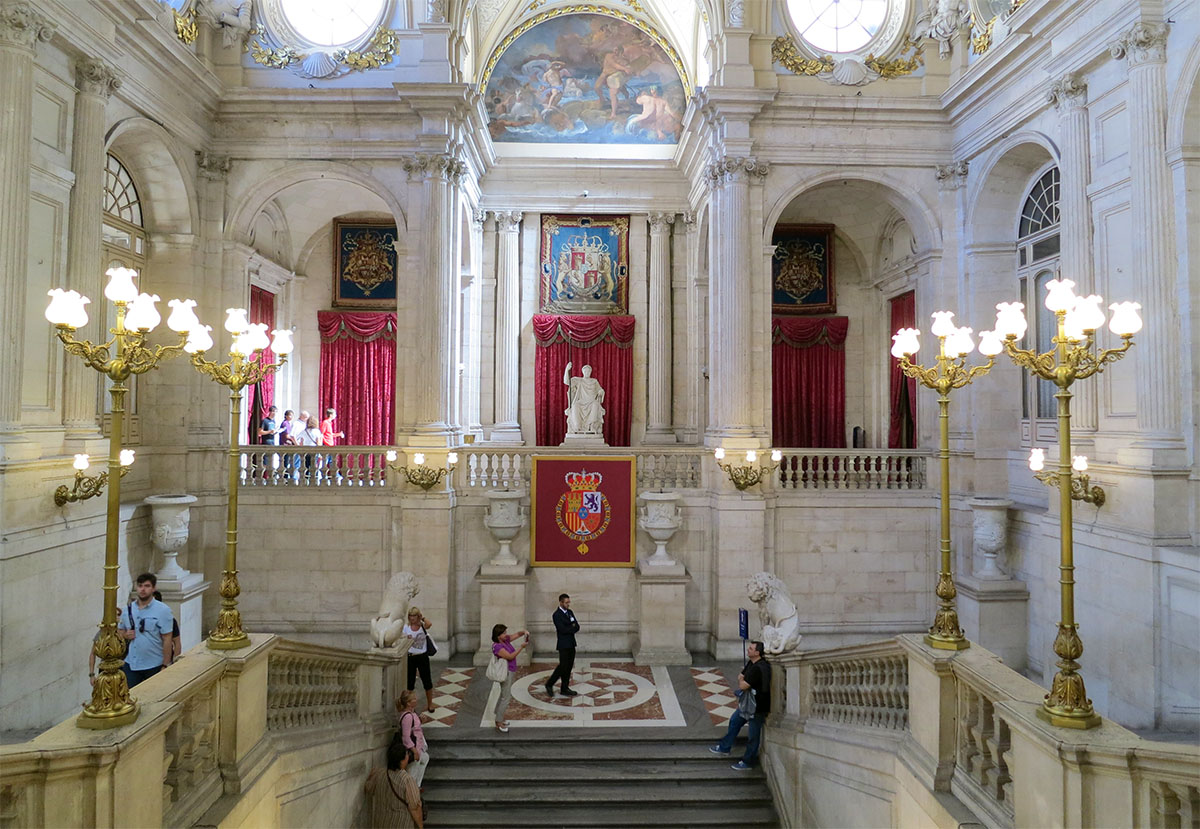
The moment you walk in, you’re hit with this massive marble staircase designed by Sabatini. It’s one of those “movie moments” that sets the scene of how grand it is straight away. Denis spent about 10 minutes just admiring the ceiling fresco. It’s AMAZING!
King Charles III’s Apartments
This was probably our favourite part of the interior. These rooms are where the King actually lived and they are wild. The style is Rococo, which basically means decorate every single bit of the space.
The real highlight here is King Charles III’s Bedroom. It’s fascinating because this is the actual room where the King died in 1788. Unlike the massive state rooms, this space feels personal (though still incredibly fancy) and it definitely has a different atmosphere to the rest of the palace.
The Throne Room
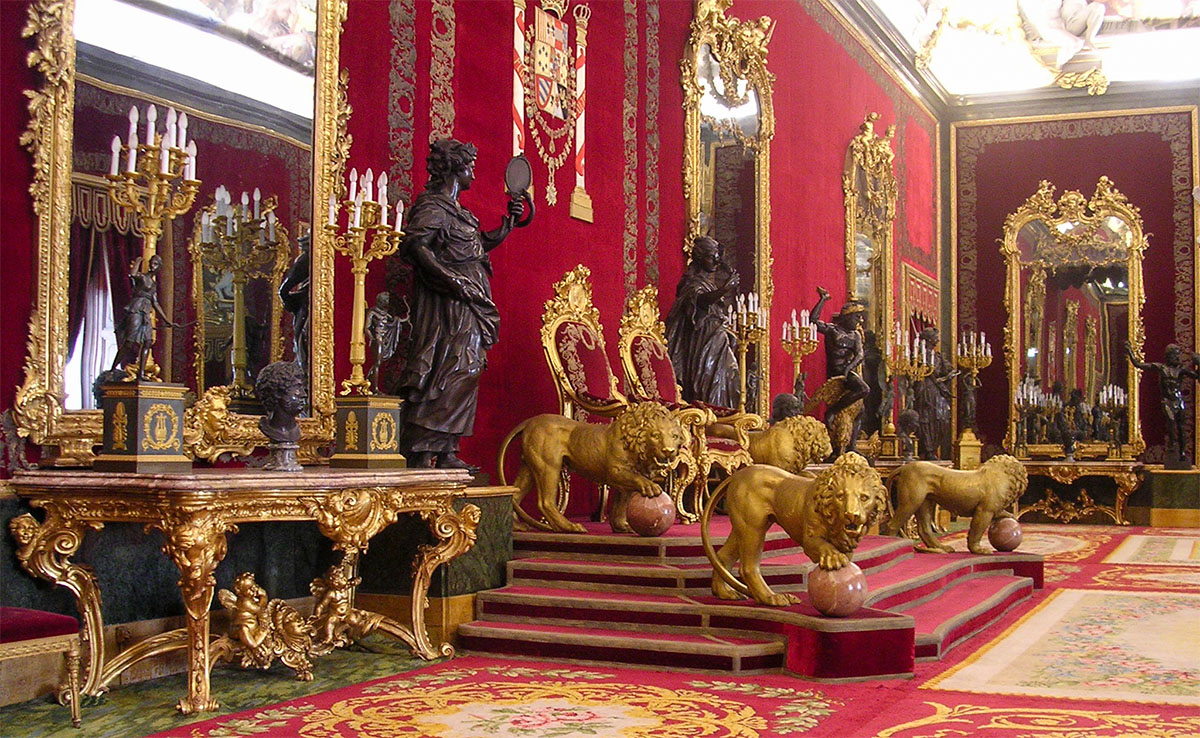
This is the big one. It hasn’t really changed since the reign of Charles III. The walls are covered in red velvet, there are massive chandeliers and the ceiling is painted by Tiepolo. It’s incredibly grand and imposing, exactly what you expect a palace to look like.
The Crown Jewels
We didn’t actually realise the Crown Jewels were on display here until we stumbled upon them. Unlike the Tower of London where they are in a massive vault, here they’re displayed in the Royal Chamber.
You’ll see the Royal Crown and the Sceptre. Fun fact: Spanish monarchs aren’t actually crowned, they are proclaimed, so this crown is purely symbolic and never actually worn.
The Royal Armoury (Real Armería)
We were actually gutted about this one! Denis was really looking forward to seeing the armoury, which is widely considered one of the best in the world, but it was unfortunately closed on the day we visited.
Usually, it contains full suits of armour worn by Kings like Charles V and Philip II. Make sure you check if it’s open before you book if this is a dealbreaker for you!
Practical Tips for Visiting
- Photography Rules: In the past, you could only take pictures on the main stairs but the rules have recently changed. You’re now allowed to take photos (without flash) in almost all the rooms including the Throne Room and Banquet Hall. Just keep an eye out for specific signs as a few sensitive areas (like the Royal Chapel) are still restricted.
- Security: There is a bag scan and metal detector at the entrance. Leave large backpacks at your hotel or you’ll have to check them into the lockers (which requires a €1 coin).
- Wear Comfy Shoes: It’s a long walk on hard marble floors. By the end, our feet were definitely feeling it.
- Free Gardens: If you want a great view without the ticket price, the Sabatini Gardens (to the north) and Campo del Moro (behind the palace) are free to enter and have stunning views of the building (they were closed for renovation when we went!).
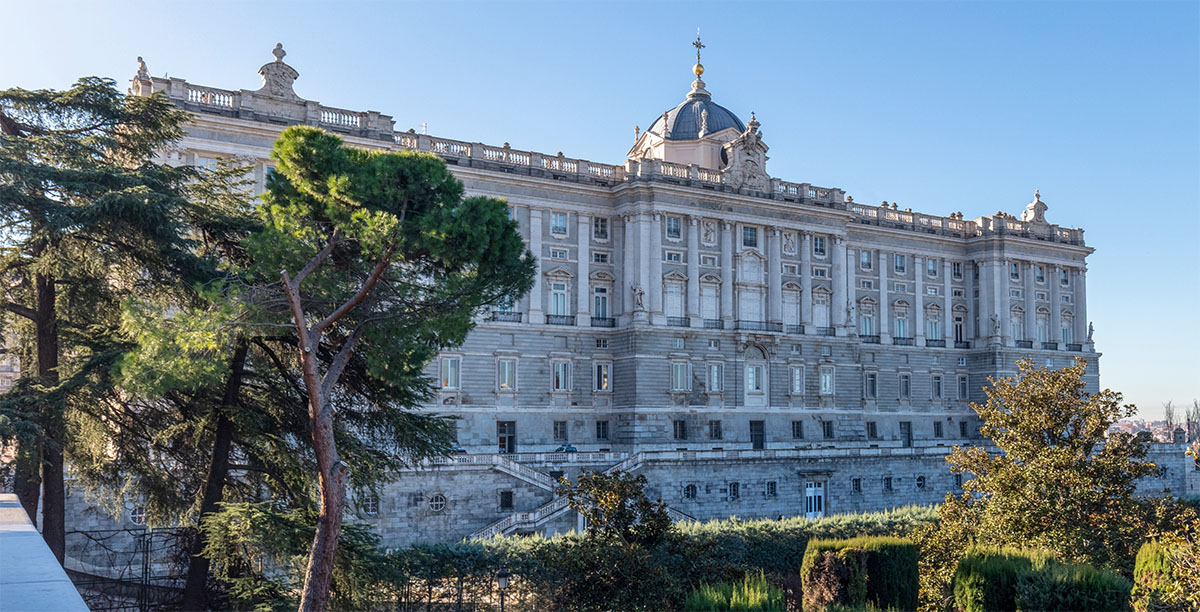
Our Final Verdict
So, is the Royal Palace of Madrid actually worth the hype?
Absolutely yes!
We’ve been to a lot of palaces but this one really does knock you sideways. The sheer amount of gold leaf, velvet and marble is just ridiculous (in the best possible way.)
However, we have to be real (or réal) with you: your enjoyment depends entirely on skipping that queue!
If we had stood in line for 90 minutes (and it rained the day we visited), we probably would have been far less enthusiastic. It looks like absolute misery waiting out there. Do yourself a massive favour and book the ticket online and walk straight in like you own the place.
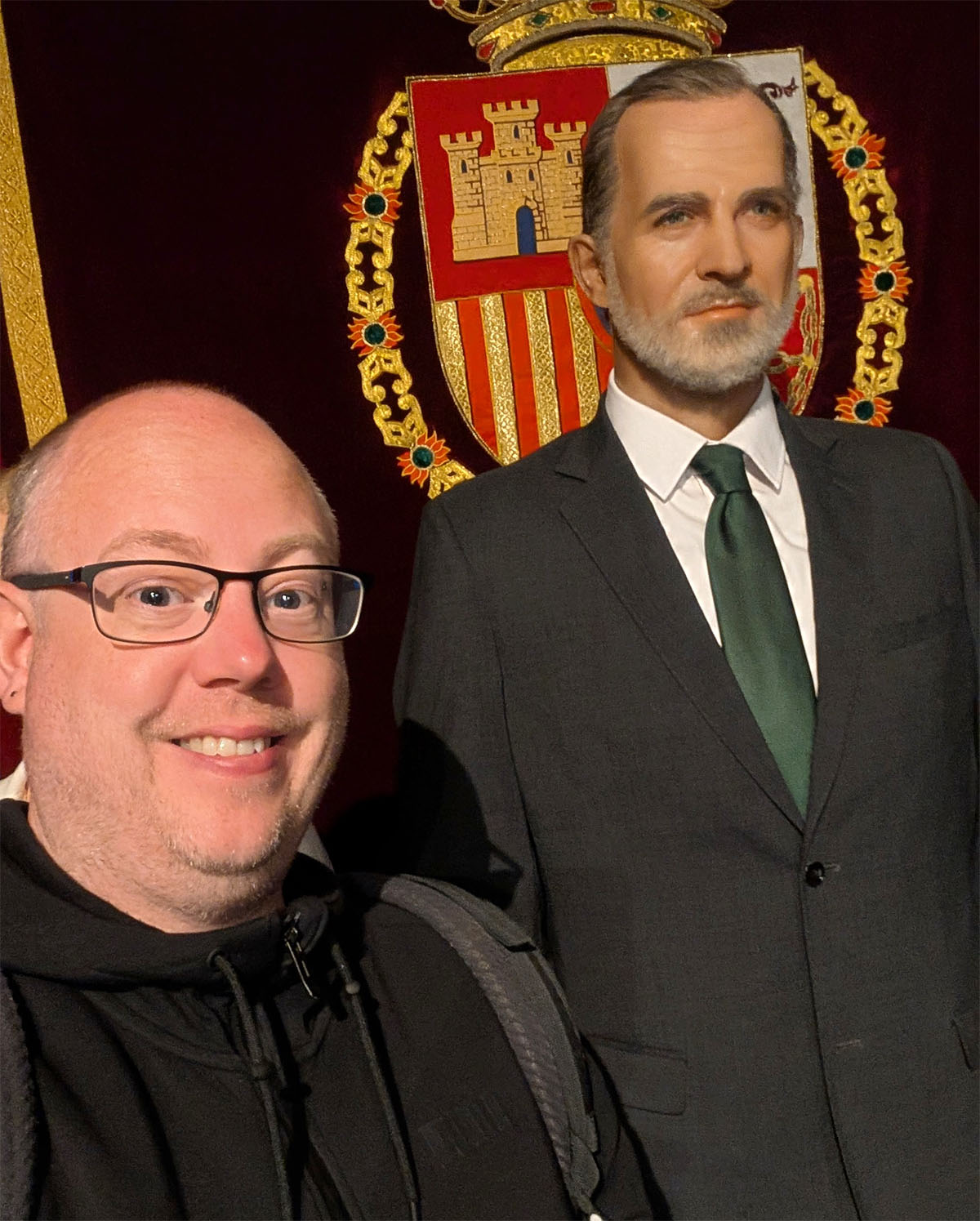
And speaking of royals, if you’re looking to actually take a few pictures with the Spanish Royal Family, you should check out the Museo de Cera (Wax Museum)! And if you just want to get away from the crowds for a bit, hop on the Metro for the short trip out to the Zoo Aquarium Madrid or the Parque de Atracciones.